Running for His Father: Nick’s Marathon for
ALS Research

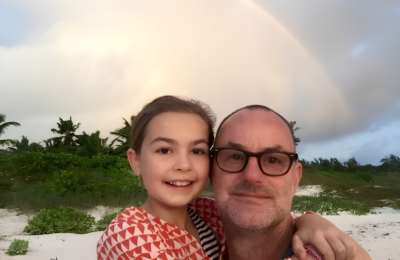
Earlier this fall, Nick Grimmer ran his first ever New York City Marathon in honor of his father, Kevin, who died from ALS in November 2023.
Kevin spent more than 30 years as an athletic director and basketball coach at SUNY Polytechnic Institute. He was a college and professional basketball player, a six-foot-eight presence, and the center of a family where all three kids grew up playing sports. When he retired, he should have had decades ahead to travel, golf, and enjoy life with his wife, children, and grandchildren. Instead, strange symptoms began, and within about two years, he was gone.
In the months after his father’s passing, people kept asking Nick what they could do to help. He decided to turn that goodwill into something lasting: support for ALS research, and a marathon run in his dad’s honor.
We spoke with Nick about his family’s ALS story, why he chose to run for Project ALS, and what hope looks like to him now that the race is over but the work continues.
Can you share a bit about your dad and how ALS entered your family’s life?
Nick: My dad died from ALS in November of 2023. He had been officially diagnosed in December 2022, but in reality, the symptoms started earlier, pretty soon after he retired.
He had been an athlete his whole life. He played college basketball at Hamilton College, then professionally in England for a couple of years before coming back home and working at a college in upstate New York. He spent over 30 years there as an athletic director and basketball coach. Athletics were a huge part of our family’s identity. My brother and I played basketball in college, my sister played field hockey, and my dad was always in the middle of it.
The hardest part is that he never really got to enjoy retirement. He and my mom are big golfers, and for a brief moment it looked like they were going to have that phase of life they had worked for. Then his back leg started giving out when he swung a golf club. At first doctors thought it could be a pinched nerve or drop foot or just wear and tear from being a big guy who played a lot of sports.
Slowly, we realized they were ruling out the “hopeful” diagnoses and getting closer to the worst one. It all escalated quickly. From official diagnosis to his passing was less than a year. From the first signs to losing him was about two years. It was a long two years.
After he passed away, a lot of people probably wanted to support you. How did that lead to fundraising in his name?
Nick: We were very fortunate in that we did not need financial help personally, and at first my instinct was to say no when people asked what they could do. But if people want to do something, you have to give them a way to channel that.
We decided to identify a few causes related to ALS where we could raise money in his name. One was his college. SUNY Polytechnic Institute is dedicating the basketball court to him, which means a lot to us. We also gave to our local ALS chapter in upstate New York, near Utica, because they helped my parents connect with resources after his diagnosis, even though they are a small organization.
And then I wanted to find a larger organization focused on research. I work in nonprofit development at a community foundation, so I’m used to vetting charities. I used those skills to look for a group that was really serious about ALS research and that would use donations in a way I could stand behind. That is how I found Project ALS.
What made Project ALS stand out to you when you were looking for an organization to support?
Nick: I was specifically looking for a group focused on the research side of ALS. After seeing my dad go through what he did, my opinion is that the best thing we can do is find a cure so that fewer families have to live through that.
I did what I always do in my day job. I checked out Project ALS’s reputation, I looked at the board and staff, read your 990s, and got a sense of how money is used. I really agreed with the way you are investing in research and the impact you are trying to make.
To me, raising funds for ALS research is about preventing what happened to my family from happening to the next one. We cannot change what happened to my dad, but we can try to change what happens to other families in the future.
You chose to run the NYC Marathon for Project ALS. Had you ever done anything like that before?
Nick: No, this was my first marathon. I run recreationally to stay in shape and offset some of my bad habits, but I had never been a “marathon person.”
I honestly cannot remember exactly how the idea came up. I think I got an email about applying for the charity bib program, and that led to some emails with Sage at Project ALS. She did a kind of informal interview with me in early spring. A couple of days later, I got an email saying I had been accepted.
That is when it hit me: I actually had to go run 26 miles.
How did you feel after committing to the race and fundraising for it?
Nick: If I had just signed up for a marathon on my own, there would not be much pressure. People would say “that’s cool” and move on. Running for Project ALS in my dad’s honor felt different.
There is emotional pressure. I did not want to let down the people who donated. I wanted to raise as much as we possibly could. I do not have any social media accounts, so I am not exactly a natural fundraising influencer. But my wife and my mom helped spread the word. We launched my marathon page on my dad’s birthday, May 24, and within a few days we had already raised over five figures. That was unbelievable. It showed how much love people had for my dad and how much they wanted to support us.
I also think it says something about Project ALS and the way you tell your story. Being able to say that donations go directly into research and getting to the root cause of this disease really resonated with people.
You were training while working full time and raising three kids. What was that like?
Nick: In a word, inconsistent. We have three kids, ten, seven, and four. Their schedules are busier than mine. So I tried to build a routine around early mornings before anyone else was awake.
One thing I came to understand is that the marathon itself is only part of the story. The real “race” is the training block, the months of getting up early, pushing through fatigue, and trying not to get injured so you can still function as a parent and at work. I did not train perfectly, but I knew I could finish. I was just hoping to cross the line and still be able to stand up at my kids’ events the next week.
What made running in New York City so meaningful for you and your family?
Nick: New York City has always been important to our family. We live in New Hartford, near Utica, about three and a half hours away, and we have spent countless trips in the city over the years. My wife loves theater. I go to sporting events and concerts. We take our kids to Yankee games. We even go down just to walk around for a day or two.
My dad also had a long connection to New York City through basketball. He recruited players from the city to come play at SUNY Poly, and we spent many nights down there for games against schools like Lehman and St. Joseph’s Brooklyn. New York City is woven into our family history.
The timing of the marathon made it even more meaningful. Race day fell just before the two-year anniversary of his passing. Instead of spending that weekend sitting around my mother’s house, sad and quiet, we were in a city he loved, doing something big and hopeful in his name. I ran with his name on my shirt. It felt like a celebration of his life, not just a reminder of his loss.
Now that the race is behind you, what message do you hope people take from your marathon and your fundraising?
Nick: We cannot help every individual family in a one-off way. As much as we would like to, we cannot undo what ALS has already done to people. What we can do is use the goodwill that exists for my father and the energy our family has put into keeping his legacy alive and push it toward research.
People donated amounts ranging from five dollars to thousands. Every bit of that is an investment in a future where fewer families go through what ours did. I work in philanthropy, so I think about return on investment a lot. I genuinely believe that every dollar we put into good ALS research now will pay itself back many times over in the form of treatments, answers, and hopefully one day a cure.
From mile 14 to 22, when things got really hard, that is what I thought about. Whatever pain or fatigue I was feeling did not come close to what my dad endured every day at the end of his life. People living with ALS are basically running ten marathons a day just to get through ordinary tasks. Keeping that in mind made it impossible to quit.
What does hope look like to you now in the fight against ALS?
Nick: I do not know if we will see a cure in my lifetime. I hope we do. But if not, I hope my kids see it in theirs, or my grandkids in theirs. Hope, to me, is that we are a generation or two away from other families not having to watch someone vibrant and healthy lose everything so quickly.
We cannot change the past. We cannot bring my dad back or erase those two difficult years. But we can decide what to do with the anger and grief that are left. For me, that means raising money, telling our story, and supporting research so that maybe one day my kids will read an article that says ALS has been cured or eliminated.
That is why I ran. That is why we chose Project ALS. That is why I hope this story leads to even one more person learning about ALS and caring enough to act.
Earlier this fall, Nick Grimmer ran his first ever New York City Marathon in honor of his father, Kevin, who died from ALS in November 2023.
Kevin spent more than 30 years as an athletic director and basketball coach at SUNY Polytechnic Institute. He was a college and professional basketball player, a six-foot-eight presence, and the center of a family where all three kids grew up playing sports. When he retired, he should have had decades ahead to travel, golf, and enjoy life with his wife, children, and grandchildren. Instead, strange symptoms began, and within about two years, he was gone.
In the months after his father’s passing, people kept asking Nick what they could do to help. He decided to turn that goodwill into something lasting: support for ALS research, and a marathon run in his dad’s honor.
We spoke with Nick about his family’s ALS story, why he chose to run for Project ALS, and what hope looks like to him now that the race is over but the work continues.
Can you share a bit about your dad and how ALS entered your family’s life?
Nick: My dad died from ALS in November of 2023. He had been officially diagnosed in December 2022, but in reality, the symptoms started earlier, pretty soon after he retired.
He had been an athlete his whole life. He played college basketball at Hamilton College, then professionally in England for a couple of years before coming back home and working at a college in upstate New York. He spent over 30 years there as an athletic director and basketball coach. Athletics were a huge part of our family’s identity. My brother and I played basketball in college, my sister played field hockey, and my dad was always in the middle of it.
The hardest part is that he never really got to enjoy retirement. He and my mom are big golfers, and for a brief moment it looked like they were going to have that phase of life they had worked for. Then his back leg started giving out when he swung a golf club. At first doctors thought it could be a pinched nerve or drop foot or just wear and tear from being a big guy who played a lot of sports.
Slowly, we realized they were ruling out the “hopeful” diagnoses and getting closer to the worst one. It all escalated quickly. From official diagnosis to his passing was less than a year. From the first signs to losing him was about two years. It was a long two years.
After he passed away, a lot of people probably wanted to support you. How did that lead to fundraising in his name?
Nick: We were very fortunate in that we did not need financial help personally, and at first my instinct was to say no when people asked what they could do. But if people want to do something, you have to give them a way to channel that.
We decided to identify a few causes related to ALS where we could raise money in his name. One was his college. SUNY Polytechnic Institute is dedicating the basketball court to him, which means a lot to us. We also gave to our local ALS chapter in upstate New York, near Utica, because they helped my parents connect with resources after his diagnosis, even though they are a small organization.
And then I wanted to find a larger organization focused on research. I work in nonprofit development at a community foundation, so I’m used to vetting charities. I used those skills to look for a group that was really serious about ALS research and that would use donations in a way I could stand behind. That is how I found Project ALS.
What made Project ALS stand out to you when you were looking for an organization to support?
Nick: I was specifically looking for a group focused on the research side of ALS. After seeing my dad go through what he did, my opinion is that the best thing we can do is find a cure so that fewer families have to live through that.
I did what I always do in my day job. I checked out Project ALS’s reputation, I looked at the board and staff, read your 990s, and got a sense of how money is used. I really agreed with the way you are investing in research and the impact you are trying to make.
To me, raising funds for ALS research is about preventing what happened to my family from happening to the next one. We cannot change what happened to my dad, but we can try to change what happens to other families in the future.
You chose to run the NYC Marathon for Project ALS. Had you ever done anything like that before?
Nick: No, this was my first marathon. I run recreationally to stay in shape and offset some of my bad habits, but I had never been a “marathon person.”
I honestly cannot remember exactly how the idea came up. I think I got an email about applying for the charity bib program, and that led to some emails with Sage at Project ALS. She did a kind of informal interview with me in early spring. A couple of days later, I got an email saying I had been accepted.
That is when it hit me: I actually had to go run 26 miles.
How did you feel after committing to the race and fundraising for it?
Nick: If I had just signed up for a marathon on my own, there would not be much pressure. People would say “that’s cool” and move on. Running for Project ALS in my dad’s honor felt different.
There is emotional pressure. I did not want to let down the people who donated. I wanted to raise as much as we possibly could. I do not have any social media accounts, so I am not exactly a natural fundraising influencer. But my wife and my mom helped spread the word. We launched my marathon page on my dad’s birthday, May 24, and within a few days we had already raised over five figures. That was unbelievable. It showed how much love people had for my dad and how much they wanted to support us.
I also think it says something about Project ALS and the way you tell your story. Being able to say that donations go directly into research and getting to the root cause of this disease really resonated with people.
You were training while working full time and raising three kids. What was that like?
Nick: In a word, inconsistent. We have three kids, ten, seven, and four. Their schedules are busier than mine. So I tried to build a routine around early mornings before anyone else was awake.
One thing I came to understand is that the marathon itself is only part of the story. The real “race” is the training block, the months of getting up early, pushing through fatigue, and trying not to get injured so you can still function as a parent and at work. I did not train perfectly, but I knew I could finish. I was just hoping to cross the line and still be able to stand up at my kids’ events the next week.
What made running in New York City so meaningful for you and your family?
Nick: New York City has always been important to our family. We live in New Hartford, near Utica, about three and a half hours away, and we have spent countless trips in the city over the years. My wife loves theater. I go to sporting events and concerts. We take our kids to Yankee games. We even go down just to walk around for a day or two.
My dad also had a long connection to New York City through basketball. He recruited players from the city to come play at SUNY Poly, and we spent many nights down there for games against schools like Lehman and St. Joseph’s Brooklyn. New York City is woven into our family history.
The timing of the marathon made it even more meaningful. Race day fell just before the two-year anniversary of his passing. Instead of spending that weekend sitting around my mother’s house, sad and quiet, we were in a city he loved, doing something big and hopeful in his name. I ran with his name on my shirt. It felt like a celebration of his life, not just a reminder of his loss.
Now that the race is behind you, what message do you hope people take from your marathon and your fundraising?
Nick: We cannot help every individual family in a one-off way. As much as we would like to, we cannot undo what ALS has already done to people. What we can do is use the goodwill that exists for my father and the energy our family has put into keeping his legacy alive and push it toward research.
People donated amounts ranging from five dollars to thousands. Every bit of that is an investment in a future where fewer families go through what ours did. I work in philanthropy, so I think about return on investment a lot. I genuinely believe that every dollar we put into good ALS research now will pay itself back many times over in the form of treatments, answers, and hopefully one day a cure.
From mile 14 to 22, when things got really hard, that is what I thought about. Whatever pain or fatigue I was feeling did not come close to what my dad endured every day at the end of his life. People living with ALS are basically running ten marathons a day just to get through ordinary tasks. Keeping that in mind made it impossible to quit.
What does hope look like to you now in the fight against ALS?
Nick: I do not know if we will see a cure in my lifetime. I hope we do. But if not, I hope my kids see it in theirs, or my grandkids in theirs. Hope, to me, is that we are a generation or two away from other families not having to watch someone vibrant and healthy lose everything so quickly.
We cannot change the past. We cannot bring my dad back or erase those two difficult years. But we can decide what to do with the anger and grief that are left. For me, that means raising money, telling our story, and supporting research so that maybe one day my kids will read an article that says ALS has been cured or eliminated.
That is why I ran. That is why we chose Project ALS. That is why I hope this story leads to even one more person learning about ALS and caring enough to act.