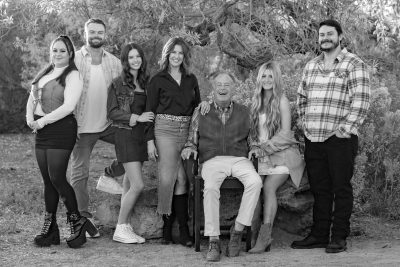
We have reached December. This month has always been very reflective for me. As a January baby, December allows me to take inventory of all that I’ve gained and lost in the past year as I prepare for a new year of life. This year, I have lost more limb function and independence. I have lost a lot of breathing function, some pounds and, at times, my patience. I have gained delicious memories with my daughter, appreciation for those who tirelessly care for me, a feeding tube, a grey hair and many meaningful relationships.
I cannot work at Project ALS without acknowledging that December also marks the 22nd anniversary of our co-founder, Jenifer Estess’, passing from ALS.
Twenty-two years ago, as Jenifer’s life came to an end, I was beginning my adult life much like she had. I was a fellow artsy student at NYU (New York University), Jenifer’s alma mater. I was taking poetry, feminism and music classes, dreaming big and making questionable dating decisions. I ate lunch at the fountain in Washington Square Park. I looked for cheap tickets to Broadway shows. I let New York shape me like only New York can. I often wonder how many times I passed Jenifer’s apartment on my aimless walks to clear my head.
Today I am almost the same age Jenifer was when she passed.
I live with the same disease. I utilize a sip vent and bipap machine like she did. Every week I meet with her sister, Valerie, to talk about ALS research but also about infuriating politics and music and kids and death and hope. I see her sister, Meredith, hold unwavering commitment to the belief that there is a way out of this. What a bittersweet honor it is to have so many wonderful and absolutely tragic life experiences in common with someone.
The past twenty-two years have shown that progress and perseverance can coexist with grief.
Project ALS was born out of love and an unwillingness to accept “no cure” for an answer. That spirit lives on. While the road to effective treatments has proven to be a marathon, the advances made in the last two decades are undeniable. We have identified more disease-relevant genes, created stem cell-derived motor neurons and have tested countless compounds to find the most promising options. This year we saw prosetin reach clinical trials. Our Therapeutics Core researchers made significant discoveries about motor neuron subtypes, applied precision medicine approaches to treatment, found gene involvement in sporadic cases, identified new compounds ready for trials and were leaders in utilizing AI for motor function monitoring. Although we must recognize those we have lost this year, we can rejoice in all of the knowledge we have gained.
How will 2026 impact the next twenty-two years?
The work must move forward to honor the memory of those no longer here and support all of those who battle with ALS every day. Right now, another young woman sits at a café in the West Village reading Audre Lorde, avoiding roommate drama and trying to make sense of the world. In the unfortunate event that she is diagnosed with ALS many years from now, how will things be different? Let’s continue the quest for a cure together.
**Melissa Diaz-Viera has been the Research Operations Coordinator for Project ALS since January 2024. She was diagnosed with sporadic limb onset ALS in 2023.