
Thanksgiving has passed, and many families now shift into the familiar rhythm of holiday gatherings and traditions. For someone living with ALS, however, these celebrations carry a different meaning—blending gratitude with grief, joy with exhaustion, and presence with the awareness that time feels more precious than ever.
We recently spoke with Joey Porrello, diagnosed with ALS in May 2022, about Thanksgiving, food, family, and what it’s like to celebrate when your body no longer moves the way you want it to.
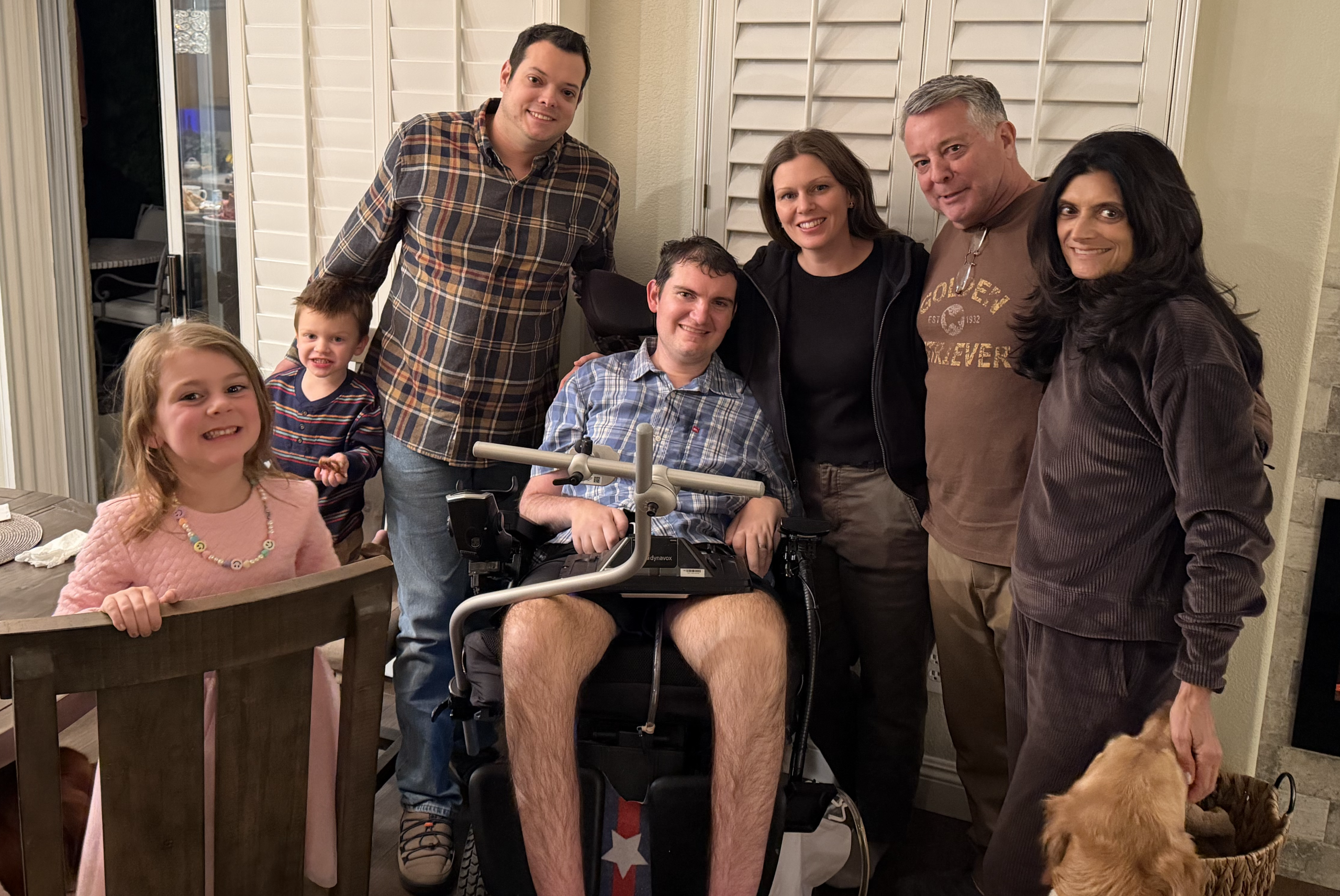
Thanksgiving, Then and Now
Before ALS, Thanksgiving meant involvement—carving the turkey, playing games, and contributing to the celebration. Even when he wasn’t hosting, Joey enjoyed adding to the day and the enjoyment of others.
Now, the experience is different. Large gatherings feel overwhelming. Noise drowns out conversation, and crowded rooms leave him parked in a corner. “Sometimes I feel like one of the food stations,” Joey said. “Not having the autonomy to freely engage can make me feel like a dish my family members are scoping out simply because I rely on them to initiate conversation. Maybe I should put the rolls on my lap to feel more involved!”
What once felt like a shared potluck now feels like watching from the sidelines. “The spirit of the holiday is giving—it’s in the name. With ALS, you simply have less to give.”
This is the quiet grief many people with ALS carry during the holidays: not just the loss of abilities, but the loss of participation and presence in ways that once felt natural.
Food, Feeding Tubes, and the Meaning Behind a Meal
For many, the holidays revolve around food—shared meals, family recipes, plates passed around the table. For someone living with ALS, food can be complicated. But Joey still enjoys his favorite part of Thanksgiving: gravy, conveniently feeding-tube ready. “I honestly don’t miss food. I miss being involved in the making and serving,” he says.
Though he can’t serve, Joey finds small ways to contribute, like brainstorming recipes or encouraging his family to try new combinations. This year’s idea: sweet potato fry poutine.
One message Joey wants people to remember: “Do not complain about how full you are. It is insulting to complain about gorging yourself when there’s a person who literally cannot.”
Even small thoughts or feelings that are easily overlooked can affect loved ones who no longer experience things you might take for granted, like the simple discomfort of a full belly after a holiday meal.
Inclusion Takes Intention
When asked how his family ensures he feels included during holiday meals, Joey was honest: “I don’t think they really can. Thanksgiving is stressful for lots of people, and when you’re stressed you don’t focus on inclusion. It’s difficult for everyone.”
Some family members make extra effort—pausing to talk or checking in—but true inclusion is challenging. ALS limits what he can do, and celebrations often move quickly. His advice: focus on the family members who choose to be intentional.
During the holidays, intention is everything. A moment of eye contact. A pulled-up chair. A slowed conversation. These small choices matter more than most people realize.
Comfort Comes From Space, Not Just Presence
With ALS, the body cannot escape discomfort or the feeling of being trapped. Physical space during gatherings is essential.
“The most meaningful part is being in the right spot in the house,” he shared. Noise and crowding can be overwhelming. People leaning on or touching his wheelchair can feel like an invasion of the little control he has left.
“ALS is claustrophobic already. Additional restrictions can feel panicky. Give disabled people time and space. We are already uncomfortable.”
Inclusion is not just emotional. It’s practical and spatial. It’s about respecting a body that cannot always protect itself from the environment around it.
A Message for Anyone Planning a Holiday Celebration
Holidays can be stressful—decorating, cooking, travel, hosting. From someone living with ALS, the message is clear: “Complaining about the holidays is super annoying. It is the whole ‘you don’t have to, you get to’ argument.”
Joey’s message feels even more urgent knowing the reality of ALS: “Understand that every holiday for a person at any stage of ALS could be their last. Remembering that will probably change the way you choose to act.”
The holidays will come and go, but for families affected by ALS, these gatherings hold a weight that is invisible unless you are living it.
As we move through this season, and toward future ones, may we remember these quiet lessons. Be intentional. Slow down. Make space. Choose compassion over convenience. Do not take presence for granted.
Above all, be grateful for the moments you get to share with the people you love.
This holiday season, honor people living with ALS by supporting Project ALS. Your gift powers critical research and brings hope for more holidays shared with family, today and in the years to come.