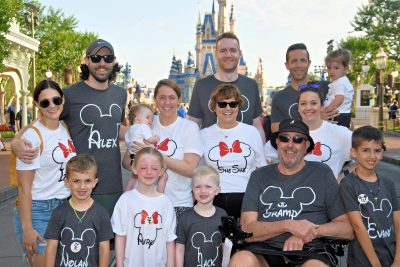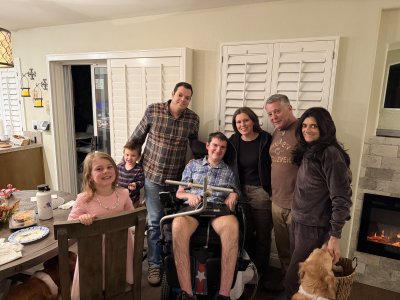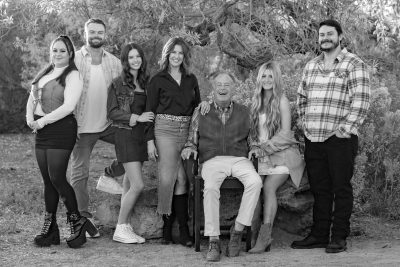
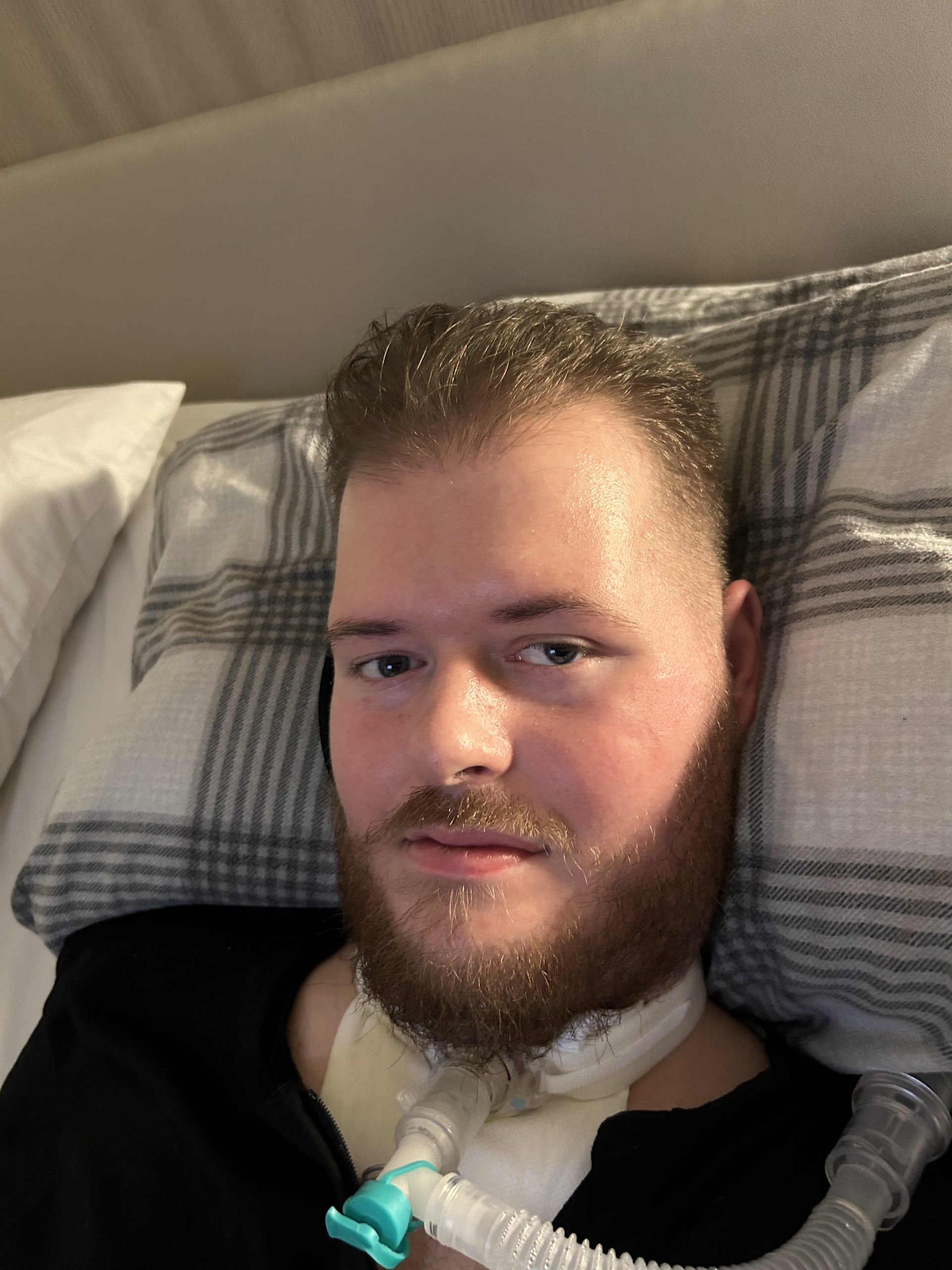
 Jacob Harper is 26 years old, from southern West Virginia, and living with ALS. According to the West Virginia ALS Association, he is the youngest West Virginian living with the disease. But he is more than just a diagnosis or a unique statistic, especially to his parents, Dale and Barb. To the two of them, Jacob is simply their son, whom they have walked alongside throughout his journey with ALS.
“My onset was in December 2021,” Jacob says. After losing the ability to move his eyes, he now uses a Neuro Node to communicate. “My diagnosis came quickly after that, in March 2022.”
At first, the signs were subtle. A limp in Jacob’s left leg. Something that could have been brushed off or explained away. But on January 2, 2022, Jacob fell while stepping down from the drum riser at church. That moment stopped everything.
“That fall was enough to concern my mom and dad,” Jacob recalls.
Jacob’s parents refused to leave it to speculation. They insisted on answers, scheduling an appointment at the orthopedic neurology center in Charleston, West Virginia. From there, the questions multiplied and the timeline accelerated. Concern gave way to urgency, and the unimaginable became real.
During this time, Jacob’s understanding of ALS was limited. “I had participated in the 2014 Ice Bucket Challenge,” he says, “but really had no idea about the monster that is ALS. I actually did not learn about the disease until the day I was diagnosed.”
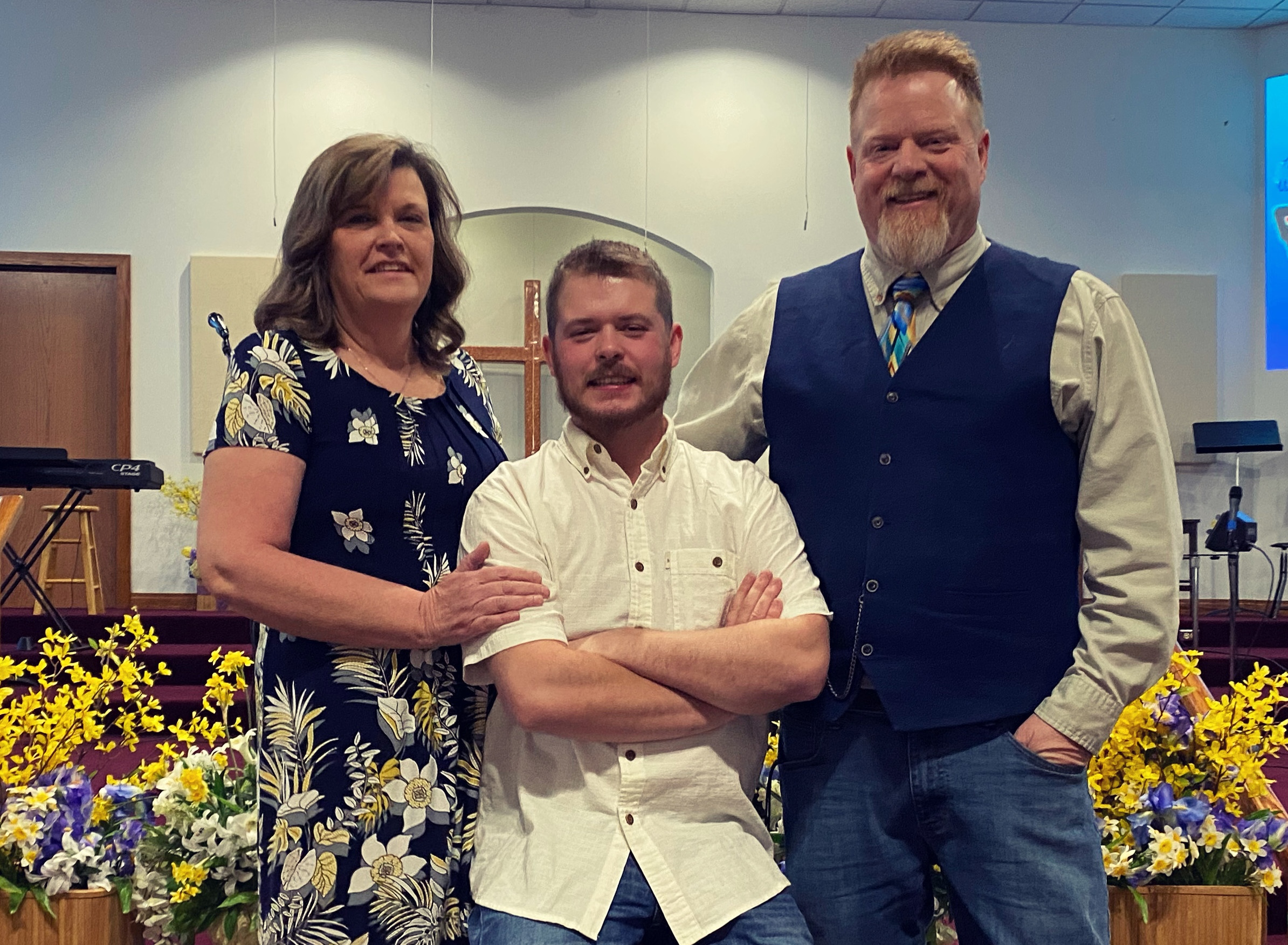
That day changed not just Jacob’s life, but his parent’s as well.
“For me, the biggest surprise was seeing how quickly the disease progressed,” Jacob says. His diagnosis, a rare and aggressive P525L FUS gene mutation, moved with devastating speed. “March 2022, I was diagnosed. April 2022, I was working in a machine shop. September 2022, I was in a power chair. The following November came the tracheostomy.”
In less than a year, Jacob’s independence slipped away. In its place grew something else—a deeper, evolving relationship between a mother, a father, and a son.
Living with ALS has reshaped Jacob’s understanding of strength, but it has also sharpened his perspective. “Perspective is everything,” he says. “How you perceive your situation can truly make a difference in the amount of quality days you experience.” He often returns to a quote by Henry Ford: “Whether you think you can, or think you can’t, you’re right.”
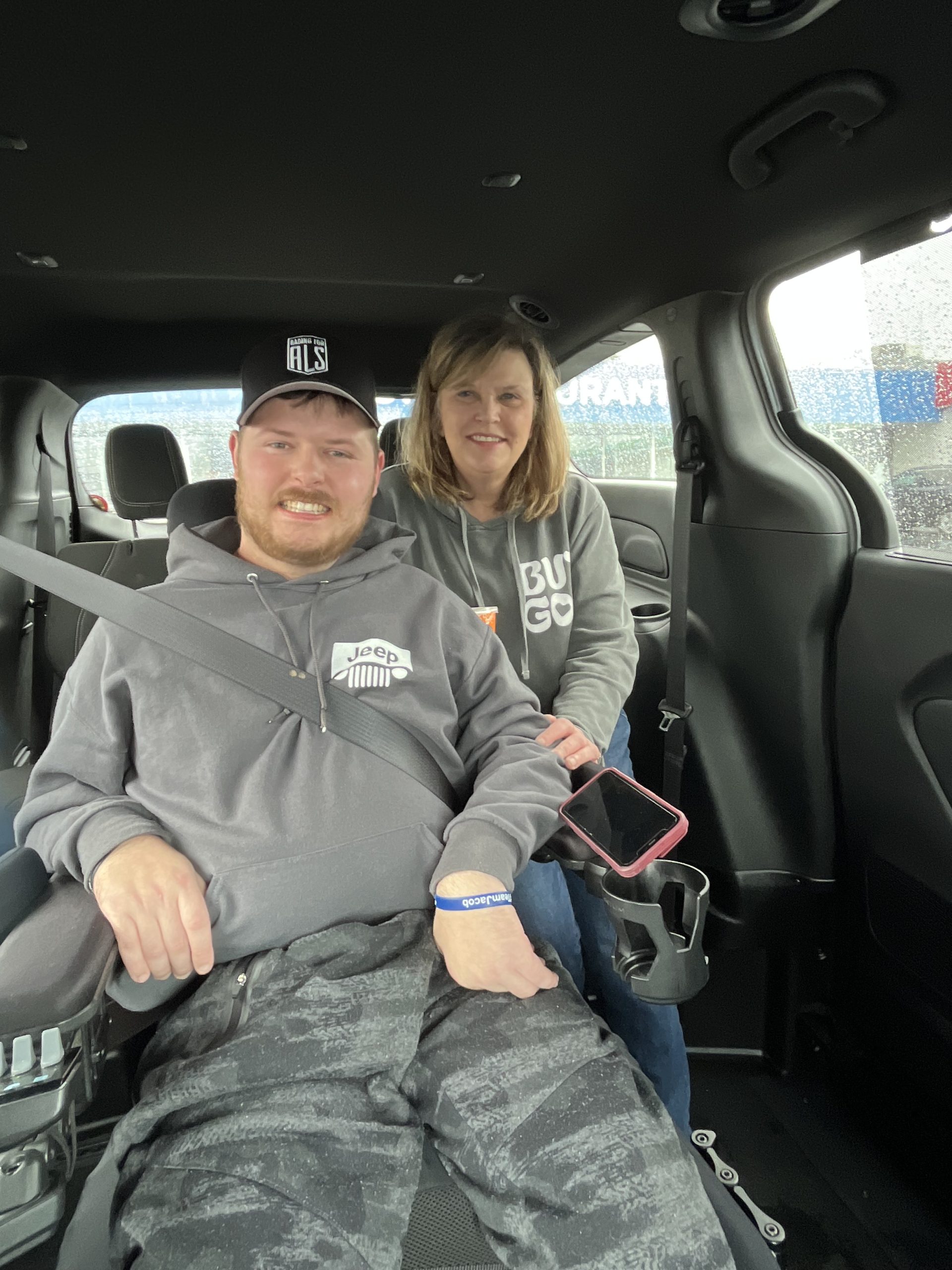 That mindset did not emerge on its own. It has been reinforced daily by his loving parents. Both parents have shifted into roles as caregivers, but due to the necessity of private insurance for Jacob’s treatments, Barb has continued working. Despite this, when she comes home she joins her husband as they split the caregiving duties, with the intent to be Jacob’s biggest advocates.
ALS has also reshaped Jacob’s relationships beyond his immediate family. “Those I am closest to came from the most unlikely places,” he says. “While others whom I had known my entire life, including close family members, up and disappeared. I haven’t heard from some in years.”
Through all of that change, his parents remained constant.
“My priorities are primarily faith and family,” Jacob says, adding with quiet honesty, “of course breathing is up there as a pretty important one also.” Faith, family, and the determination to make meaning out of suffering have become the foundation of their days together.
Helping others navigate ALS matters deeply to Jacob. “Anything I can do to help others navigate this disease,” he says, “any activity I can participate in that helps promote awareness, or raises funds which can help fuel the science and technology behind what will ultimately be a cure.”
The shared belief that action matters is what led Jacob and his family to Project ALS. They follow others “traveling the same road,” seeking community, support, and progress wherever they can find it. When Jacob learned more about Project ALS’ focus on research, it resonated with his entire family.
“My life expectancy was one to three years,” Jacob says. “Now, in year four, I truly believe the Ionis jacifusen (ION363) clinical trial is why I am here to answer these questions.” While he continues to hope for a complete cure, he believes the treatment has slowed the progression of ALS in his body—time he and his family treasure.
Hope, for Jacob, is inseparable from faith. “That’s easy,” he says. “My hope is in Jesus. I believe there will be a cure for this disease, and that faith and science walk hand-in-hand. Without my faith, I have no hope.”
There are things he wishes more people understood about living with ALS, and these are seen by his father every day. The financial burden alone can be overwhelming. “It’s an expensive disease,” Jacob explains. “One that can cost upwards of $10,000 per month to navigate.” Not every family has access to quality insurance or Medicare, and the stress compounds quickly.
He also wants people to understand the humanity that remains intact. “We are still the same people you used to know,” Jacob says. “We are not deaf. We can hear you quite well. And though we may not be able to respond, we are grateful for your interaction and your precious time to speak to and acknowledge our existence.” He adds, “Yes, although paralyzed, I can still feel everything on my body, and cognitively, I’m as sharp as ever.”
Looking ahead, Jacob believes ALS is not incurable, just underfunded. “The first person diagnosed with ALS was in 1869,” he says. “That individual was given the same prognosis as I received in March 2022. This is unacceptable.” He believes the technology that gave rise to jacifusen holds promise not only for ALS, but for Parkinson’s, Alzheimer’s, MS, and other motor neuron diseases.
For now, Jacob and his parents live one day at a time.
“We take one day at a time,” Jacob says. And today, surrounded by faith, family, and parents who never looks away, Jacob is certain of one thing: “Today, I am healthy. I am happy. I am terrific.”
It is a simple declaration. And in the context of a father, a mother, and son facing ALS together, it is a powerful one.